

Key Insights: How pharmacopoeias work together globally
Published 30 October 2026
In this month’s Key Insights, we will be looking further afield and discussing two specific ways pharmacopoeias work together globally, building upon last month's Key Insights, where we discussed the relationship between the European Pharmacopoeia (Ph. Eur.) and the British Pharmacopoeia (BP).
We'll cover:
- A report on the BP’s attendance at the International Meeting of World Pharmacopoeia
- The Pharmacopoeial Discussion Group and examples of global collaboration that can be found in the BP
Pharmaceutical quality - A global collaborative effort
Medicines and their ingredients are developed, manufactured and supplied in an increasingly global landscape. As the MHRA Strategy 2030 recognises, regulators worldwide are playing a greater role in “global supply chains and market access”. At the same time, the public standards used to assess the quality of medicines are published by national, regional and international pharmacopoeias operating within different regulatory systems.
This makes collaboration between pharmacopoeias important. By sharing scientific expertise, comparing approaches and developing standards together, pharmacopoeias can address common challenges and reduce unnecessary differences.
One forum for that collaboration is the International Meeting of the World Pharmacopoeias (IMWP) where world pharmacopoeias convene to share their experience and expertise.
The 16th International Meeting of World Pharmacopoeias (IMWP)
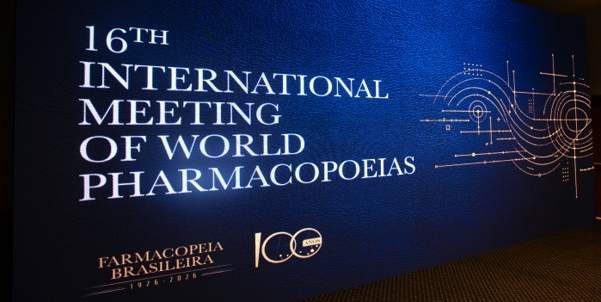
The 16th International Meeting of the World Pharmacopoeias (IMWP) was held in Brasília, Brazil, from 15 to 17 June 2026. Co-hosted by the World Health Organization (WHO) and Brazil’s health regulatory authority, ANVISA, the meeting brought together participants from across the world representing 17 pharmacopoeial organisations. It provided a forum for pharmacopoeias to share information about their work, review progress on joint projects and identify new opportunities for collaboration.
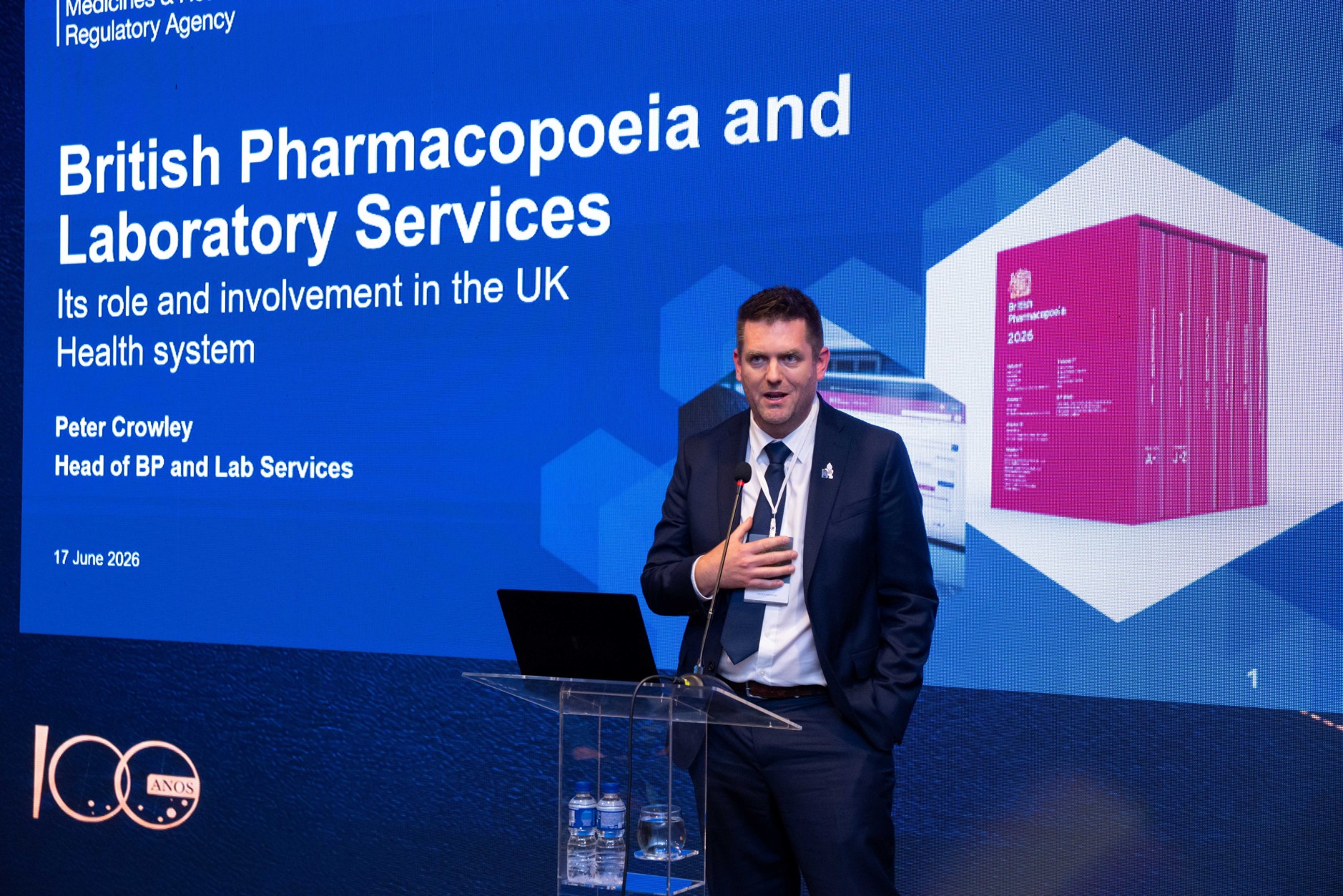
The BP was represented by Mr Peter Crowley, Head of the BP and Lab Services Team and Editor-in-Chief of the BP, and Dr Maryna Dmitriieva, Lead BP Scientist.
Reflecting on the event, Peter said: “A key outcome from this year’s meeting was the confirmation of a white paper outlining non-binding principles to strengthen environmental sustainability. This was a genuinely collaborative effort, with many pharmacopoeias coming together to draft, review, and refine the content into a shared voice, reflecting a common goal. We look forward to its publication in the near future.”
A report on the 16th IMWP has been published and is available on the WHO website. Another group that impacts global pharmacopoeial harmonisation is the Pharmacopoeial Discussion Group (PDG).
The Pharmacopoeial Discussion Group (PDG)
A successful mechanism for international pharmacopoeial collaboration is the Pharmacopoeial Discussion Group (PDG). Its members are the European Pharmacopoeia, Indian Pharmacopoeia, Japanese Pharmacopoeia and United States Pharmacopeia, with the World Health Organization participating as an observer. Through the PDG, these pharmacopoeias work together to harmonise selected excipient monographs and general chapters, helping to reduce unnecessary differences in pharmacopoeial standards.
The BP is not itself a member of the PDG. However, its work is directly relevant to BP users because the BP incorporates Ph. Eur. texts, including monographs and general chapters that have been through the PDG harmonisation process.
The approach of the PDG is explained in SC IV F. Pharmacopoeial Harmonisation (which reproduces Ph. Eur. Chapter 5.8). For general chapters, harmonisation aims to produce interchangeable methods or requirements. For monographs, the aim is to agree common requirements across as many attributes as possible. Complete harmonisation is not always achievable, so a text may contain both harmonised and non-harmonised elements.
BP users can recognise these differences within relevant Ph. Eur. texts through the diamond symbols:
black diamonds (♦ ♦) identify attributes or provisions of the common text that have not been harmonised;
and white diamonds (♢ ♢) identify local requirements (a test or section that is included only in the Ph. Eur. text).
The symbols therefore help users understand how far international agreement extends within a particular text. They also show why describing a monograph simply as “harmonised” does not necessarily mean that every requirement within it is identical across the participating pharmacopoeias.
Examples of PDG Harmonisation in the BP
Examples of texts that have undergone pharmacopoeial harmonisation can be found throughout the BP*. Users can identify these texts in the BP by the superscript footnote marker next to the monograph or chapter title. The corresponding footnote identifies the text as having undergone pharmacopoeial harmonisation.
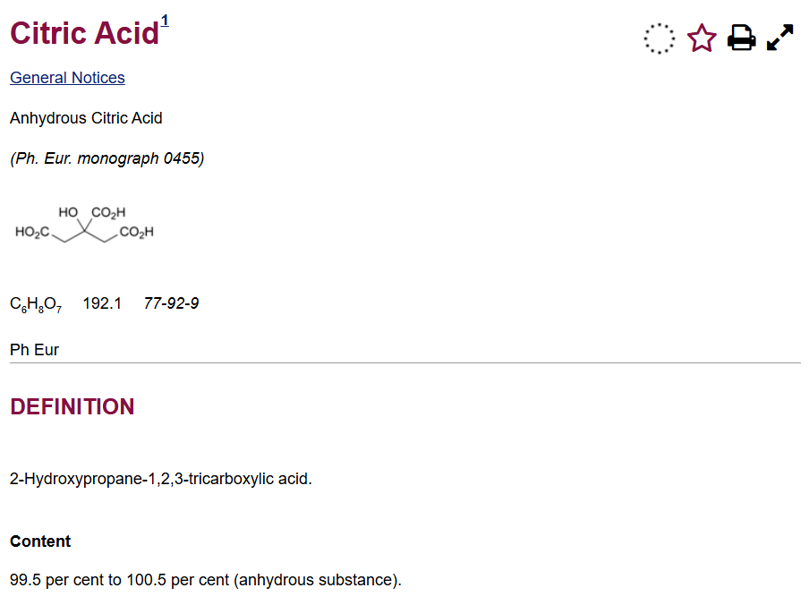
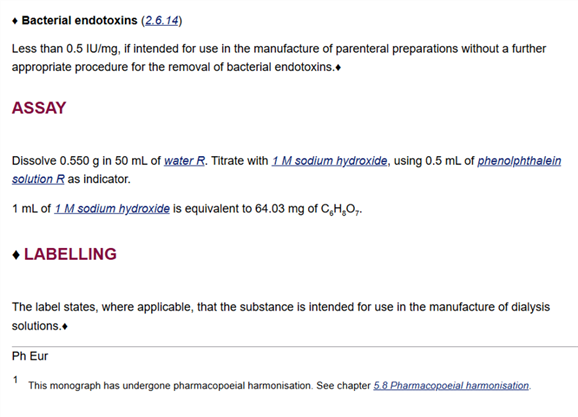
Citric Acid is an example of a monograph in the BP which has undergone harmonisation. You can see in the screenshots below of the BP website that the definition, content requirements and assay method are harmonised; however, the test for bacterial endotoxins and the labelling requirements, which are both bracketed within black diamonds (♦ ♦), are non-harmonised aspects of this monograph.
|
|
Other examples of the 80+ monographs and texts reproduced in the BP which have undergone PDG harmonisation include the microbiological methods in Appendix XVI B1, Tests for Specified Micro-organisms (Ph. Eur. 2.6.13), and Appendix XVI B2, Total Viable Aerobic Count (Ph. Eur. 2.6.13).
*Requires an active BP Online licence
Conclusion
The IMWP and PDG show how international pharmacopoeial collaboration can take different forms, from sharing expertise and addressing emerging challenges to harmonising the standards themselves. For BP users, the outcomes can be seen directly in the publication, including in harmonised monographs and general chapters.
Hopefully this article helps you understand how these texts have been developed, and where differences remain, which in turn helps you interpret and apply the BP.
International collaboration happens both around the table and on the page, supporting the global mutual goal of assuring the quality of medicines.